by KeyTech | Jul 3, 2026 | Communications, Mobile Devices, mobile networks, Mobile Phone Costs

Here’s a quick comparison of eSIM and physical SIM:
| Feature | eSIM | Physical SIM |
|---|
| Form | Built into the phone | Removable plastic card |
| Setup | Activate by scanning a QR code or downloading a profile | Insert the SIM card into the phone |
| Switching carriers | Can be done remotely without changing hardware | Requires swapping SIM cards |
| Travel | Great for adding local or travel data plans while keeping your main number | Requires carrying and changing SIMs |
| Security | Harder to steal or remove if your phone is lost | Can be removed and used in another device |
| Compatibility | Only works on eSIM-compatible devices | Works on almost all phones with a SIM slot |
Advantages of eSIM
- No need to handle tiny SIM cards.
- Store multiple carrier profiles on one phone (though usually only 1–2 can be active at a time).
- Ideal for international travel—keep your home SIM active while adding a local data plan.
- Makes device setup and carrier switching faster.
Advantages of a physical SIM
- Easy to move between phones in seconds.
- Works with older phones and devices that don’t support eSIM.
- Useful if you frequently swap phones or lend devices.
Which should you choose?
- Choose eSIM if you have a compatible phone, travel often, or like the convenience of digital activation.
- Choose a physical SIM if you frequently switch devices, use older phones, or your carrier doesn’t fully support eSIM.
For most modern smartphones (especially recent flagship models), eSIM is generally the more convenient option, while physical SIMs remain a reliable and universally compatible choice. If your phone supports both, you can even use them together for dual SIM functionality—for example, one line for personal use and another for work or travel.
by KeyTech | Mar 27, 2019 | Business Telephone Systems, Communications, IT News, mobile networks
How 5G is changing Australian internet for small businesses and consumers.

Since the days of 1G, every new generation of mobile technology and internet has brought with it faster speeds and more functionality. Now, with 5G around the corner, the wireless technology promises to deliver speeds allowing you to download a 3GB file (like a HD film) in a mere matter of seconds (in contrasts to the current 4G technology taking a minute or 2)
Low latency Internet: What is it?
With 5G comes faster speeds, the ability to support 10 times the amount of connected devices, this is a massive boost for business mobility. How is this possible you ask? One of the major drivers behind the speed boost is called latency. Latency is the time it takes from sending a request to recieve a response over the internet.
5G internet may even deliver a 30th of the latency of 4G. Thus, 30 milliseconds on 4G may equate to 1-6 milliseconds on 5G (though it won’t be quite this fast in early days). The more rapid relay of information and fewer delays may lead to advances in various technologies.
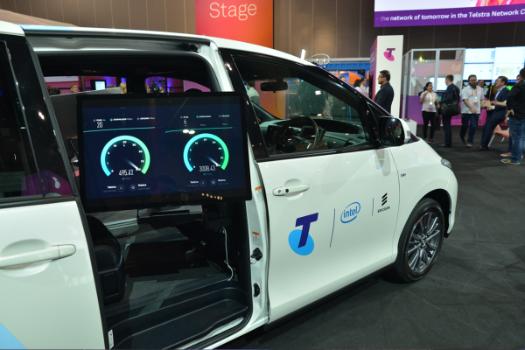
For example, imagine a self-driving car that uses such low latency to collate information from its sensors to know what’s happening virtually in real-time, whilst also receiving updates on traffic and adjusting its route to alleviate the all-to-common congestion in Brisbane. Faster end-to-end transmission from the sensors to a cloud-based control system enables the car to collate information from the sensors and respond to hazards in a timely fashion.
“5G still has to adhere to the laws of physics – limited by the speed of light. However, with 5G technology, what has changed is the time it takes for data to travel from your device to the tower, through the server, and to a router to get somewhere,” a quote from Paul Milford, Networks Principal, Mobile Innovation Rollout at Telstra.
How can Telstra’s 5G low latency benefit small businesses in Brisbane?
This latency decrease means that business requiring fast response and reaction times can enjoy increased efficiency. Combine that with other recent innovations of the tech industry like big data and machine learning and the potential is astoundingly impressive.
According to a recent study on 5G for businesses “On top of the benefits for consumers, much of 5G’s value will come from enabling Australian business to become more efficient. Three-quarters of surveyed businesses say that faster, more reliable telecommunications would benefit their business.”
There’s predicted to be an even greater benefit for those in the tech industry. “Imagine a race where high-performance cars relay a huge variety of data, from braking to acceleration to wind dynamics, back to the team’s dashboards. Now imagine if all that data is relayed via 5G. In a car race when every millisecond matters, giving the team virtually real-time data would help them make in-the-moment racing decisions” says Mr Milford.
Other potential advances include off-site surgeons using surgical robotics and 5G internet to provide medical care to those in remote areas. The faster haptic feedback (virtual-feeling) may lead to more accurate outcomes.
What will it take to get there?
5G is anticipated to contribute up to $50 billion to Australia’s GDP by 2030 according to a recent report.
Telstra hopes to help ensure that Australian businesses are among the first in the world to harness the game-changing power of 5G. Telstra is leading in rolling out 5G networks, reaching a number of world and Australian firsts, and has already rolled out more than 200 5G capable sites.
The use cases for 5G will keep growing as the technology develops, and preparations for advances in emerging technologies like Internet of Things devices (IoT), AI, augmented and virtual reality, and even drones are set to benefit. All this depends on the quality of the underlying network.
Want to know more? Contact us, read more telecommunications and IT articles, or check out what we can do for you, from Telstra business plans to small business phone systems.
by KeyTech | Nov 29, 2016 | Communications, mobile networks, Mobile Phone Costs, Telstra
Telstra updated International Travel Pass zones and pricing to provide better value for Business Customers.
- Simplified – two zones instead of three
- Value – get the benefit of Zone 2’s lower pricing, with all countries previously covered under zone 3 now included
- Flexible – Passes are still valid for 3, 7, 14 or 30 days with unlimited voice and SMS
Previous Zone
- Zone 1 – $5/day with 75MB of data per day
- Zone 2 – $10/day with 75MB of data per day
- Zone 3 – $15/day with 75MB of data per day
New Zone
Zone 1 – $5/day with 75MB of data per day
Zone 2 – $10/day with 75MB of data per day
Zone 3 on the previous setting is now included in Zone 2.
Zone 2: Argentina, Austria, Belgium, Brazil, Bulgaria, Brunei, Canada, Chile, China, Croatia, Czech Republic, Denmark, Egypt,
Estonia, Fiji, Finland, France, Germany, Greece, Hong Kong, Hungary, India, Indonesia, Ireland, Israel, Italy, Japan,
Luxembourg, Macedonia, Macau, Malaysia, Mexico, Nauru, Netherlands, New Zealand, Norway, Papua New Guinea,
Philippines, Poland, Portugal, Romania, Saudi Arabia, Serbia, Singapore, Slovak Rep., Slovenia, South Africa, South
Korea, Spain, Sweden, Switzerland, Taiwan, Thailand, Turkey, UAE, UK, USA, and Vanuatu.
Visit our International Roaming Activation page for more details.
Call our Provisioning Team on 1300 662 209 if you have questions.
by KeyTech | Oct 11, 2016 | Mobile Devices, mobile networks, Mobile Phone Costs
2G Exit – Important information about SIM only/M2M plans.
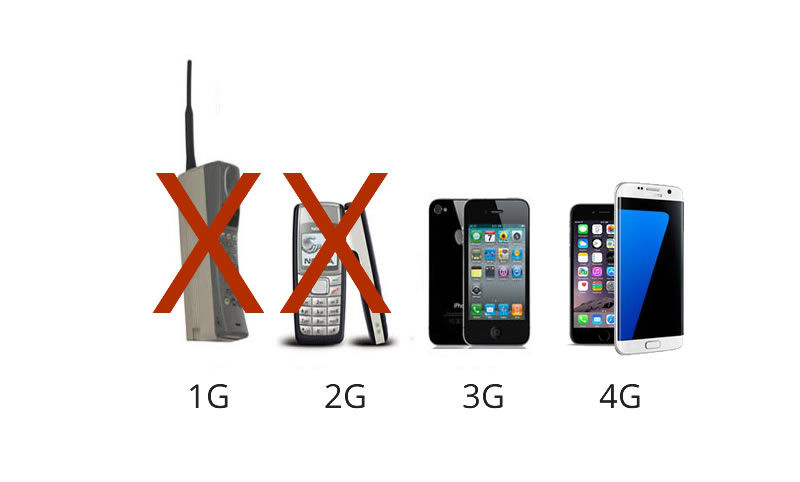
Telstra will be discontinuing the 2G (GSM) 900MHz network on 1 December 2016 Australia-wide.
As a result, any SIM cards and/or devices, including wireless machine-to-machine (M2M) services that only operate on the 2G network will stop working from this date. In addition, International Roaming will stop working for services affected by the 2G network shutdown. To minimise any interruption, all of our impacted customers will need to upgrade their services to operate using 3G or 4G technology on the Telstra Mobile Network. As a minimum, devices and SIM cards must operate on 3G 850MHz.
Important information for customers acquiring sim only and/or M2M plans
If you have any SIM only plans you must ensure that you tell us what devices you are using to ensure that you are 3G/4G compatible.
Do not source equipment that is Quad Band GSM only – these services will cease operating on our network from 1 December 2016.
What to Do?
1. We recommend migrating your devices as soon as possible, to enable a transition before the 2G network closure.
2. Closure of 2G (GSM) 900MHz network is on 1 December 2016.